4 Types of SEO to Focus On
Sometimes in life, we get to choose from a few different options. When we go out for chicken wings, there’s a number of different great sauces I can go with. Honey BBQ, Sweet Chili, Spicy Garlic, or my favorite, Garlic Parm. We get even more choices when we get to choose if we want to dip them in blue cheese or ranch or have celery on the sides. The options are endless.
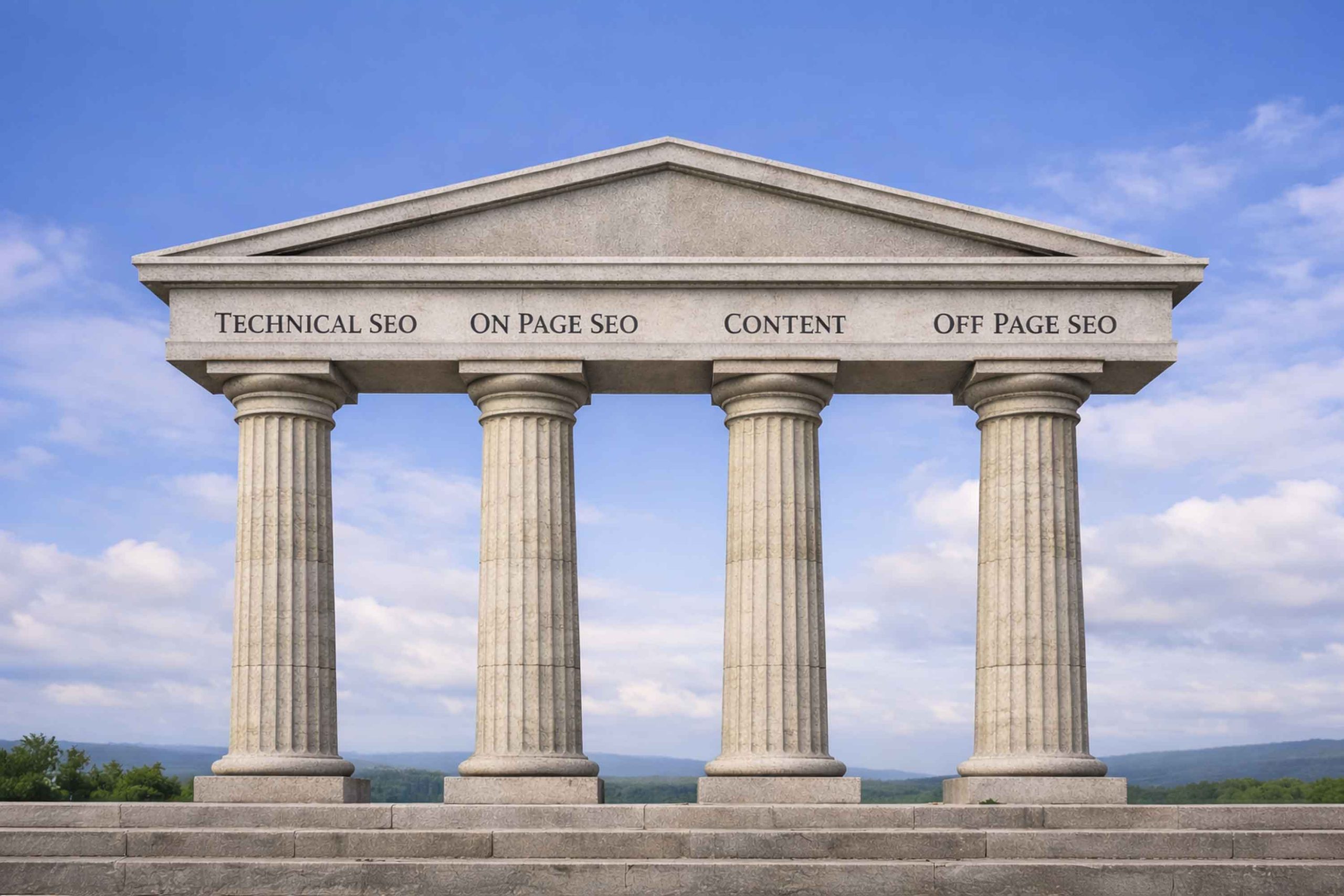
When it comes to improving your website’s search engine ranking, we get the same kind of options to choose from. Search engine optimization (SEO) isn’t a one-sauce-fits-all marketing effort. There are four main types of SEO that work together to help your website rank higher in search results. By combining On-Page SEO, Off-Page SEO, Technical SEO, and Local SEO, you can get that higher ranking you’re after.
Each type of SEO plays a key role in how search engines learn about, rank, and trust your website. A comprehensive SEO strategy isn’t going to pick just one type of SEO, but rather combines all four. You don’t have to divide your time exactly equally between the four, but giving attention to each area will make your SEO stronger and far more effective.
On-Page SEO
On-page SEO is where most small business owners should start their SEO journey. On-page SEO is all about what’s actually on your website. It’s looking at the text, the images, the structure of your pages, the keywords used. It’s the process of making sure that every part of your site clearly tells Google exactly what your business does.
This includes SEO activities like using the right keywords in your page titles, content headings, and the text on the page. With on-page SEO, you’ll focus on writing helpful, easy-to-read copy that answers the questions your audience is asking. Search engines always aim to connect users with the most relevant and valuable information possible. This means that the better your content communicates that value, the better your chances are of ranking higher in results.
On-page SEO also includes activities like optimizing the images you use, adding internal links between pages, and writing meta descriptions that encourage people to click the link to your site. Each of these small steps builds trust with both Google and your visitors.
You can think of your website as a storefront, and on-page SEO is how you make sure the lights are on, the shelves are well organized, and your best products are front and center.
Off-Page SEO
If on-page SEO is all about what happens on your website, off-page SEO is everything that happens away from it. It’s the work that builds your website’s reputation and authority across the internet.
Search engines want to recommend trusted, reliable sources. One of the biggest signals of trust is when other websites link back to yours. These backlinks tell Google that other people see value in your content. Think of them like word-of-mouth referrals for your business, when credible sources mention you, it boosts your reputation.
Off-page SEO can include things like link building, online reviews, social media engagement, and even mentions of your business on other websites. Every one of these helps search engines see that your business is active, trustworthy, and recognized within your community or industry.
For small businesses, building up off-page SEO takes time and consistency, but the long-term results are well worth it. It’s like building your reputation in the real world, the more people talk about you for the right reasons, the more trusted you become.
Technical SEO
Technical SEO is the behind-the-scenes part of your website that makes everything run smoothly. It’s not as flashy as great content or design, but it’s just as important.
This part of SEO focuses on things like site speed, mobile-friendliness, secure connections (HTTPS), and proper website indexing. It’s about making sure search engines can easily crawl and understand your site without running into errors or slow load times.
If your site takes too long to load or doesn’t work well on phones and tablets, people will leave, and search engines notice that. A technically sound website creates a better user experience, keeps visitors on your site longer, and signals to Google that your website is reliable.
You can think of technical SEO like the plumbing and wiring in a house. You might not see it, but if it’s not done right, nothing else works the way it should.
Local SEO
Local SEO is especially important for small businesses that want to reach customers nearby. It helps your website show up when people search for services “near me” or within a specific city or region.
This includes optimizing your Google Business Profile, using location-based keywords, and collecting customer reviews. It also means making sure your business name, address, and phone number (often called NAP information) are consistent across directories and listings.
Local SEO is what helps your business stand out when someone searches “web design Green Bay” or “coffee shop in De Pere.” It connects your business to the exact audience most likely to visit or contact you.
You can think of local SEO as putting your business on the digital map. Literally. It ensures your business appears where and when local customers are looking for the services you offer.
A Steady Foundation for Your Marketing
Each of these four types of SEO (On-Page, Off-Page, Technical, and Local) plays an essential role in helping your website perform its best. When they all work together, they build a strong, steady foundation for your marketing.
You don’t need to master every detail right away, but giving time and attention to each area can make a big difference in your rankings, traffic, and leads. The best SEO plans aren’t about quick fixes or shortcuts. They’re about building long-term trust with Google and your audience.
At Full Scope Creative, we help small businesses strengthen each area of SEO so their websites don’t just look good, they get found.