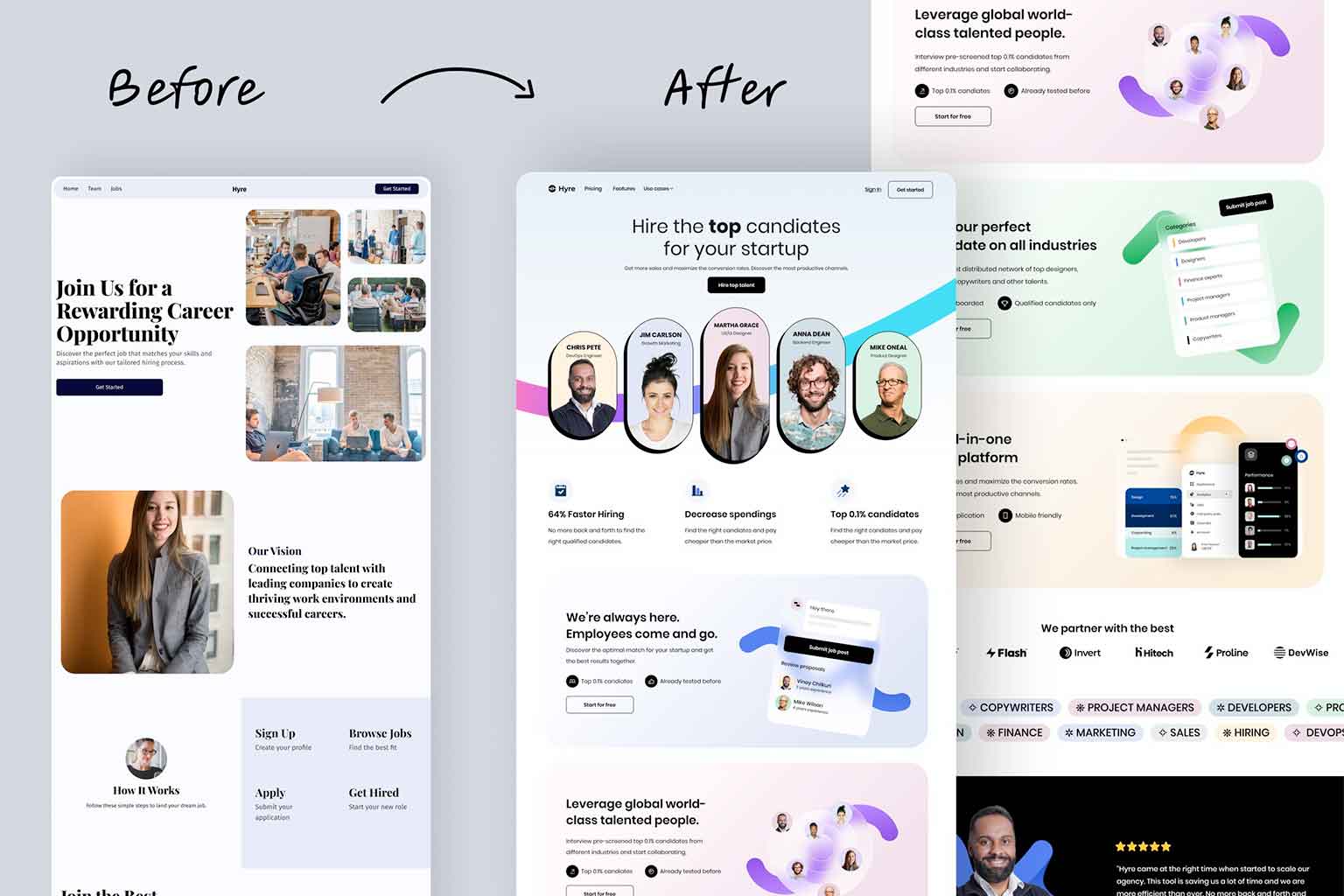
Does a redesign actually make sense?
This is a common question we hear from small business owners: do I need to redesign my website?
And the answer is usually: maybe.
There comes a point when it is time to stop putting more lipstick on the pig. There also comes a point where a website is being held together with the digital equivalent of duct tape and chewing gum. When a website gets to that place, it is no longer about tweaking a headline or swapping a photo. That is where a redesign starts to make sense.
Not every outdated or frustrating website needs a full redesign. The average lifespan of a small business website is often anywhere from three to seven years. Factors like goals, how actively the site is used as a marketing tool, and how it is maintained all play a role. Age alone does not decide anything.
What matters far more is whether the process you have in place to keep your website running is working or completely broken.
Before talking about layouts or features, the conversation should always start with the why. Why do you think you need a redesign? Why would a redesign improve your business?
Once the reasons and expectations are clear, it becomes much easier to know whether a redesign is the right move. Sometimes it is. Sometimes it is not.
Signs you probably need a redesign
There are situations where the signs are hard to overlook.
If your website is difficult to update, avoided by the people who are supposed to use it, or feels fragile every time a change is made, that is not just an inconvenience. That is a warning sign. A website should not feel like something that might break if you touch it.
Another common indicator is when fixes never seem to stay fixed. One issue gets resolved, but another shows up shortly after. Pages load inconsistently. Forms stop working. Updates introduce new problems. Over time, the site becomes a patchwork of solutions instead of a stable foundation.
Clarity is another major factor. If visitors struggle to understand what you do, who you work with, or how to take the next step, the problem usually goes deeper than copy or imagery. When the structure itself no longer supports clear communication, a redesign often becomes the most practical option.
Changes in your business can also create the need for a redesign. New services, a shift in focus, or a different type of customer can slowly make an older site feel out of sync. When the website no longer reflects how your business actually operates, it creates friction for both you and your customers.
Signs you might not need one yet
On the other hand, not every imperfect website is a candidate for a full rebuild.
If your site is stable, secure, and manageable, that already puts you in a strong position. If visitors can understand what you offer and easily reach out, the core job of the website is still being done.
In many cases, the real issue is not the website itself but the lack of an ongoing process around it. Content has not been reviewed in years. Calls to action are unclear. No one is responsible for keeping things organized. Those problems can often be addressed without starting over.
There are also times when expectations are misplaced. A redesign will not automatically fix lead quality, replace follow-up, or solve broader marketing challenges. If the strategy behind the website is unclear, rebuilding it rarely produces the results people hope for.
This is where taking a step back can be valuable. Improving what already exists is sometimes the more effective path forward.
Why the “why” matters more than the design
The most productive website conversations rarely start with visuals.
They start with questions about what is working, what is frustrating, and what the website is expected to support day to day. Why does the site feel like a problem right now? What feels harder than it should? What would success actually look like six months down the road?
When those questions are answered honestly, the direction becomes clearer. Sometimes that direction points to a redesign. Other times it points to fixing a broken process, simplifying the site, or putting better support in place.
The goal is not to have a newer website. The goal is to have a website that supports how your business actually runs.
A calmer way to decide
If you are asking yourself, “Do I need to redesign my website?”, you are already doing the right thing by slowing down and thinking it through.
Websites do reach a point where redesigning them is the right call. That does not mean every concern needs an immediate rebuild attached to it.
Thinking ahead and planning carefully usually leads to better outcomes than reacting out of frustration. In many cases, the best results come from restraint, not urgency.
Not sure if a redesign makes sense?
If you are unsure whether a redesign makes sense, we are always open to having that conversation. No pressure. No assumptions. Just an honest look at where your website is today and what would actually improve it.
Sometimes the answer is a redesign. Sometimes it is not. Either way, clarity is what makes the next step easier.